Started: May 22nd
Finished: June 2nd
TSM Rating: 4/5
It is only by pure coincidence that the last two books I picked up to the end of May featured protagonists struggling with mental health issues with varying degrees of severity. Both deal with heavy topics of suicide, depression, loss, drug abuse, and parental abandonment.
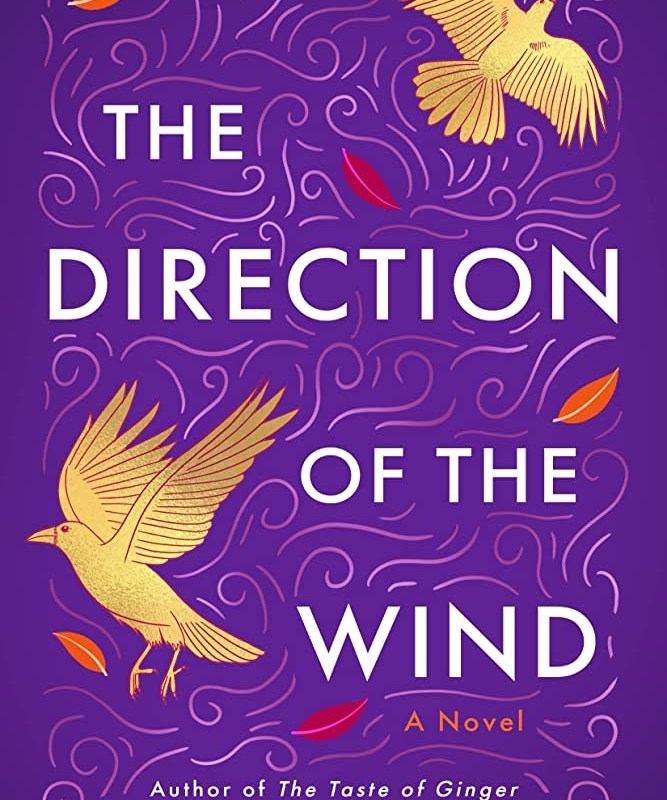
Direction of the Wind tells the story of Nita and Sophie Shah, a mother and daughter told twenty years apart. They both grew up in similar circumstances but with drastically different experiences.
The story opens with Sophie mourning the death of her beloved father. Losing him brings her back to her mother’s death as a child. When she overhears her aunts speaking of her mother leaving, not dying, it sets Sophie on a journey that is equal parts heartbreaking and hopeful.
Twenty years before Sophie’s journey, Nita takes one of her own. Overwhelmed by her community’s expectations of her as a wife and mother and driven by a growing desire to be an artist, she packs up as much as she can and leaves her marital home, and boards a plane to France.
While Mansi Shah doesn’t label what precisely is wrong with Nita, she is clearly suffering from depression and has been for most of her life. It seems that being forced into marriage and motherhood only exacerbates her condition, weighing her down in a way that feels inescapable.
After a while, though, she begins to feel the same trapped feeling in France as in India. Trapped by circumstance. Trapped by things beyond her control, and she can’t figure a way out.
She had felt trapped in her life in India, but now she was learning a new form of being trapped and wondered if people were always trapped by something, no matter what they did or where they were.
Direction of the Wind, page 88
As with Recipe for Persuasion, another woman struggles with motherhood, what it means to be a mother, and how to do what is best for her child. For Nita, it was leaving because she felt herself beginning to resent Sophie. She left to save her daughter from her “darkness,” as she put it.
They were the most serious thing that could happen in one’s life. Children highlighted every trait you lacked. And if you were not meant to be a parent, they stole your spirit in a way you could never get back.
Direction of the Wind, page 136
While it’s a story of family, it’s also a story about friends who become family to both Nita and Sophie. They both have strangers come into their lives when they need them the most. For Nita, it’s Dao. For Sophie, it’s Manoj and Naresh.
The words “I’m here for you” had a power in them that was greater than any other, even the phrase “I love you.” “I’m here for you” showed solidarity and acceptance and conveyed in the best way possible that one was not alone.
Direction of the Wind, page 222
Family is complicated. Expectations are complicated. Secrets are complicated. Mansi Shah weaves Sophie and Nita’s sorties together so well; each chapter picks up where the other left off, as Sophie follows right behind her mother, missing her by just a few steps rather than two decades. While the story has dark moments, there is always hope just around the corner.

 The Saucy Mama